The 5-5-5 rule after birth: how to really rest
Birthing a baby is often compared to running two marathons. Now imagine finishing those marathons and getting up the next morning to cook, clean and host visitors. That is exactly what many of us expect of ourselves after birth.
The 5-5-5 rule is a simple, old-fashioned way to give your body what it needs most in the first weeks: rest. Here is what it means, why it matters, and how to plan for it before your baby arrives.
What is the 5-5-5 rule?
The 5-5-5 rule breaks the first fifteen days after birth into three gentle stages:
It isn't a strict rulebook. It's a way of saying, out loud and in advance, that rest comes first.
Why rest matters so much after birth
Rest has always been, and always will be, the first medicine after birth. When you lie down, sleep or simply relax, your body can put its energy into healing instead of keeping you upright and busy.
Rest also takes pressure off a pelvic floor that has just done enormous work, which can help prevent problems like prolapse and piles. And because broken sleep at night does little for your recovery, the rest you take during the day matters even more.
If you ran two marathons, would you stand up and start cooking or cleaning the next day?
How to make the 5-5-5 rule work in real life
Most mums I speak to love the idea but wonder how it could ever work with a household to run, a partner back at work, or older children at home. The answer is to plan it before your baby arrives:
- Fill the freezer. Batch-cook soups, stews and bone broth in the last weeks of pregnancy, or ask friends for a meal rota.
- Set up a nest. Keep water, snacks, nappies, phone charger and a warm blanket within arm's reach of your bed and sofa.
- Give visitors a job. Anyone who comes to meet the baby can load the dishwasher, hang the washing or bring a meal.
- Talk to your partner early. Agree who covers cooking, older children and night-time jobs, so you aren't negotiating while exhausted.
- Stay warm. Fuzzy socks, warm drinks and a flask by the bed. Staying warm saves your body energy it can use for healing.
Rest is easier with a village
When I asked 42 mothers in the Scottish Borders about their postpartum experience, 64% didn't have family close enough to fully support them, and nearly half described feeling isolated. Rest is hard to protect when nobody is there to take over.
That's why I believe the most important preparation happens before the birth: building your own village, so the people around you know exactly how to help.
Plan your rest with the free Nourish guide
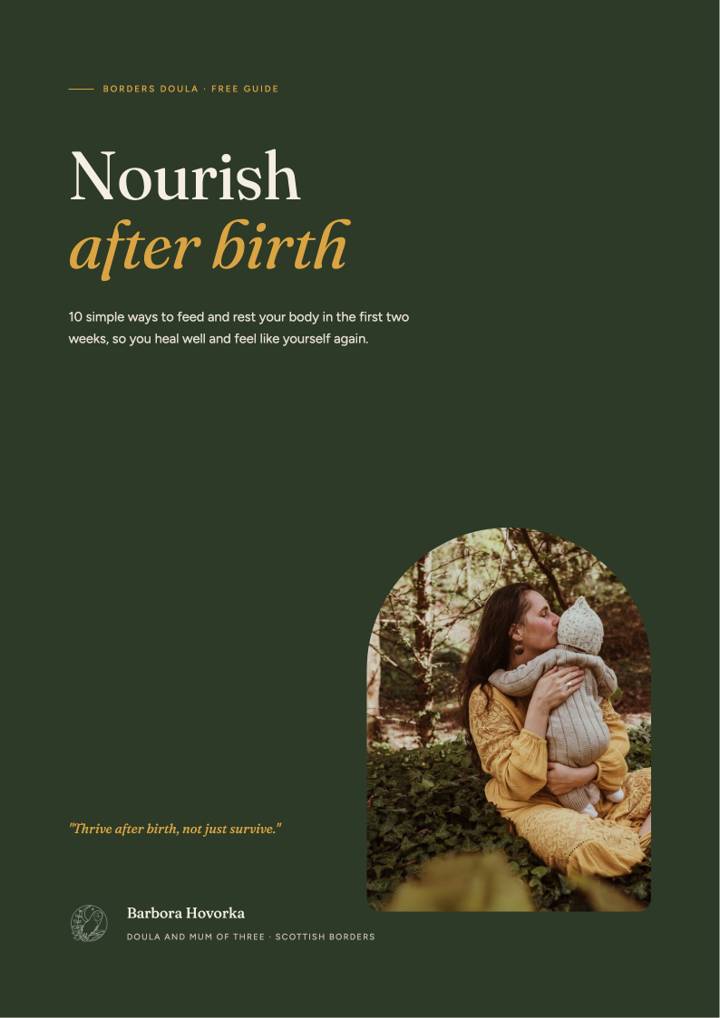
Rest is one of the three key drivers of postpartum recovery, alongside warmth and food. My free Nourish after birth guide gives you 10 simple ways to feed and rest your body in the first two weeks.
This article shares general postpartum wisdom from my own experience and doula training. It isn't medical advice. Always speak to your midwife, health visitor or GP about your own recovery.